Physical Address
304 North Cardinal St.
Dorchester Center, MA 02124
Physical Address
304 North Cardinal St.
Dorchester Center, MA 02124

Javier Milei has been called many things. Critics call him el loco, the madman. Yet nothing in his behaviour resembles madness. Quite the opposite.
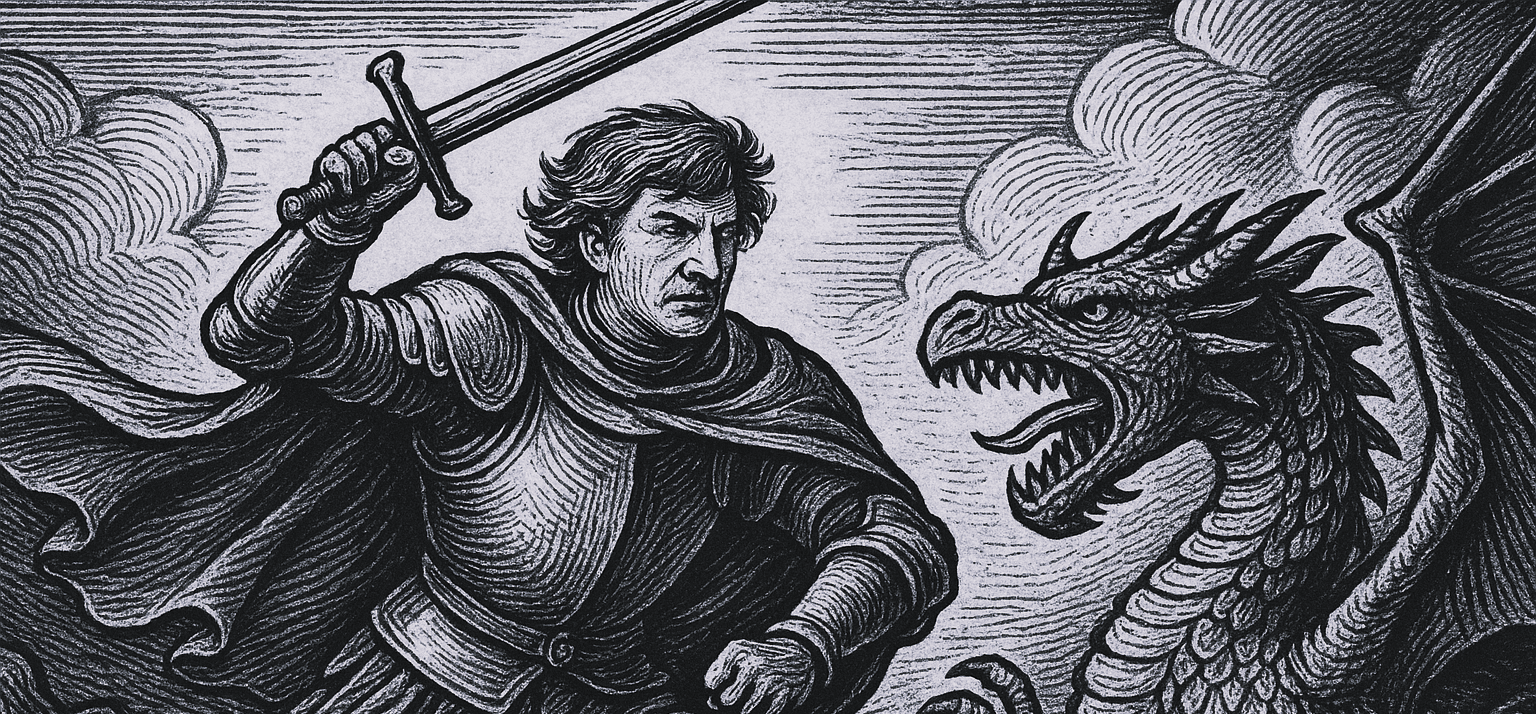
A far better nickname for him would be The Myth Slayer.
Every rule declared impossible by experts, he has already broken.
• Economists are unpopular. He teaches macro in stadiums like a rockstar.
• You cannot win a presidency without a party or money. He did it in two years with an austere campaign.
• You cannot pass laws with a weak Congress. He delivered sweeping reforms in his first year.
• You cannot balance Argentina’s budget. He did it in his first month.
• Cutting five percent of GDP triggers a recession. Twelve months later the economy had already recovered.
Betting against Milei has been a losing trade.
And a new myth is trembling on the horizon: the Deflation Ogre, to use Christine Lagarde’s imagery.
For months mainstream economists insisted the peso was doomed and the “solution” was to “let it float and accumulate reserves”, a euphemism to say “devalue and make workers pay”.
But Milei did not blink. He held the line, preserving the credibility of the peso instead of sacrificing it to the serial devaluators.
Now something “unexpected” is happening. Peso demand is rising. The currency is drifting away from the upper end of the band. Interest spreads are falling. And the economy is preparing for an investment-led recovery. We have already noted that the Super Peso is on its way.
The next hurdles are Labour and Tax reform. These will likely create a much more flexible and efficient economy. The next few months will be decisive. Knowing Milei, the reforms will be ambitious.
Once that phase is complete Milei will likely focus on two fronts:
If these milestones are reached without altering the monetary framework, the peso will eventually touch the lower edge of the band.
The Financial Reform: Full Reserve Banking
Be sure of one thing: Milei has not abandoned the idea of eliminating the Central Bank.
He has long advocated currency competition and one hundred percent reserve banking, ideas developed extensively by his mentor Jesús Huerta de Soto. In essence: a stable monetary order requires free currency choice, free banking and, above all, a system where demand deposits cannot be lent out.
This is where Argentina may be heading.
A full reserve reform would separate banking into two activities:
Under this model the Central Bank becomes a standards-setting institution rather than a lender of last resort. It defines how deposits must be held, but it no longer controls money or rescues banks.
No leverage on deposits.
No bank runs.
No lender of last resort.
No bailouts. Ever.
Once this architecture is in place, currency competition becomes real. Private or sovereign currencies, fiat or metallic based, can circulate freely.
The Future of the Peso
The Argentine government still faces a fundamental question: what should the peso become? We see three credible paths.
Option 1: A currency board leading to dollarisation
This is the simplest operationally. The Argentine peso shadows the dollar, convertible say at 1,000 to 1, and eventually disappears. It eliminates monetary discretion but completely ties Argentina to US policy. That is the trade-off.
Option 2: A floating peso with fixed supply
Under this alternative the quantity of pesos stays constant, and the currency value adjusts freely. If the peso survives it will be a market choice.
Milei originally assumed that Argentines would naturally gravitate toward the dollar, causing the peso to fade without government intervention. He appears to have reconsidered this position. With the peso’s improving fundamentals, its extinction is no longer a foregone conclusion. For example, if the peso strengthens in real terms, workers may find it more advantageous to negotiate wages denominated in pesos.
With a floating peso, if investment surges, exports strengthen, productivity rises and fiscal discipline endures, Argentina may enter a rare environment: growth-driven deflation. The kind Milei and his intellectual mentors have long defended.
Most economists panic at the word “deflation,” but history contradicts them. The nineteenth century achieved extraordinary growth with falling prices in many instances. Furthermore, in Argentina the usual debt-deflation fear should be weak: households and firms carry almost no long-term nominal debt. Assuming, of course, labour and tax reforms have occured first. Milei knows it.
Option 3: A metallic peso backed by gold or silver
Our favourite. Although Milei has never proposed such a measure, it would avoid constitutionalist objections to giving up the state’s sovereign authority over currency. The government could reinstate the legally defined Peso Oro (gold) or Peso Fuerte (silver), convert the Central Bank’s assets into the corresponding metals, and issue digital stablecoins backed by these reserves.
The money supply would expand or contract in line with its metallic backing, keeping the unit of account stable. General price deflation would be expected, though less pronounced than under option 2. A key advantage of this arrangement is that it can function purely as a unit of measure, even if most transactions are carried out in dollars.
Argentina, the Land of Silver, reviving the silver peso with a lineage reaching back to Queen Isabel of Castile. A landmark of stability. The symbolism writes itself.
The Ogre Tamed
It may be that Milei’s most unexpected contribution will be the destruction of the idea that deflation is an Ogre. Or perhaps he will confirm it decisively. One thing is certain: for good or bad he will remain on the front pages of the international press.
And something else may be happening. Could Argentina — for a century the textbook case of monetary mismanagement — become the global benchmark of sound money?
The world will say no.
The experts will say impossible.
They always do.
Will once again the Myth Slayer show that the impossible was only a myth waiting to fall? Perhaps two myths, gone in one stroke.